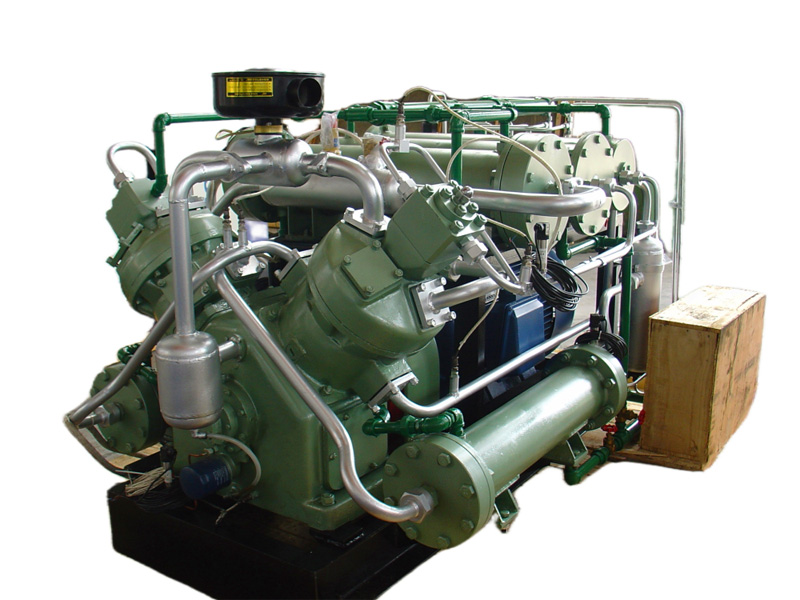
Under the “dual carbon” goals of carbon peaking and carbon neutrality, carbon dioxide is not only a major greenhouse gas but also an important natural working fluid and industrial raw material. CO₂ compressors play a prominent role in two major fields: CCUS (carbon capture, utilization, and storage) and transcritical CO₂ refrigeration and heat pump systems. Compared with ammonia and Freon systems, CO₂ systems operate at higher pressures, which imposes unique requirements on compressors and makes them key equipment in the low-carbon technology chain.
The special operating conditions of CO₂ compressors are first reflected in high-pressure operation. The high-pressure side of a transcritical CO₂ cycle can reach 10–12 MPa, far exceeding that of conventional refrigeration systems. The critical temperature of CO₂ is 31.1°C; at ambient temperature, it is in a supercritical state after cooling, and the compressor must adapt to transcritical operating conditions. High pressure differentials and high-density gas impose higher requirements on bearings, seals, and valve plates. At the same time, CO₂ has poor compatibility with conventional lubricating oils, necessitating the use of dedicated POE or PAG oils to ensure lubrication and system service life.

On the application side, transcritical CO₂ refrigeration systems have been implemented in multiple scenarios. In supermarket cold chains, they have already been applied on a large scale in Europe and the United States, with environmental regulations driving their replacement of Freon. In the field of heat pump water heating, CO₂ heat pumps can produce high-temperature hot water above 90°C, making them suitable for hotels, hospitals, and similar facilities. In industrial freezing, CO₂ compressors are also commonly used in the low-temperature stage of cascade systems for blast freezers and IQF freezers. In the CCUS field, post-combustion capture requires capturing CO₂ from power plant flue gas and pressurizing it to pipeline transport pressure; supercritical CO₂ pipeline transportation requires large compressors; and enhanced oil recovery and storage involve injecting CO₂ into oilfields for enhanced oil recovery or into deep saline aquifers for storage. In addition, chemical and food processing links such as urea synthesis and carbonated beverage production are also inseparable from CO₂ compressors.
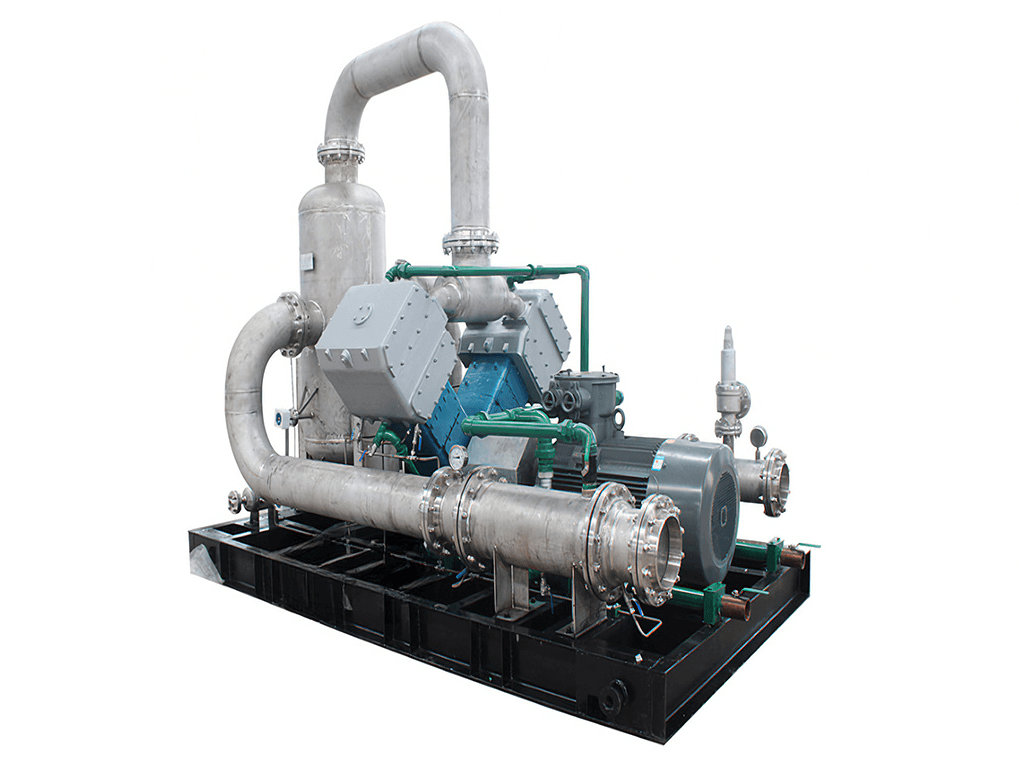
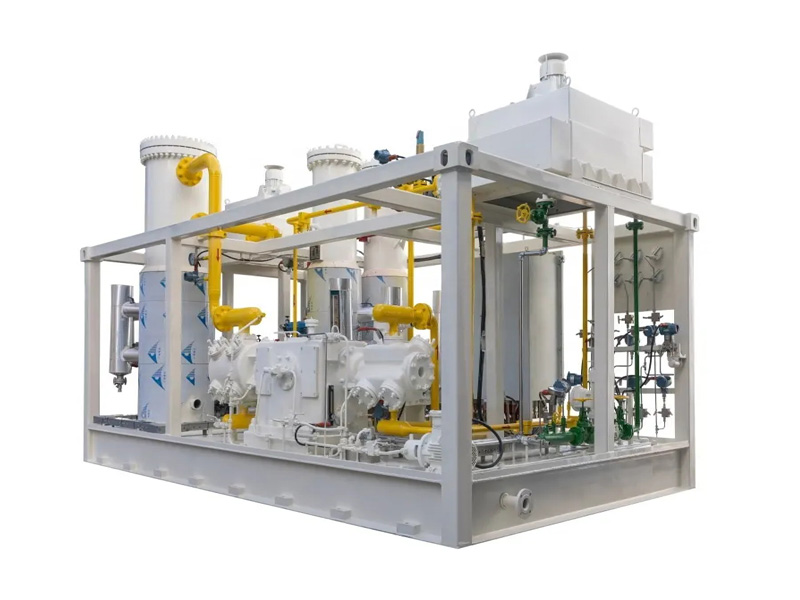
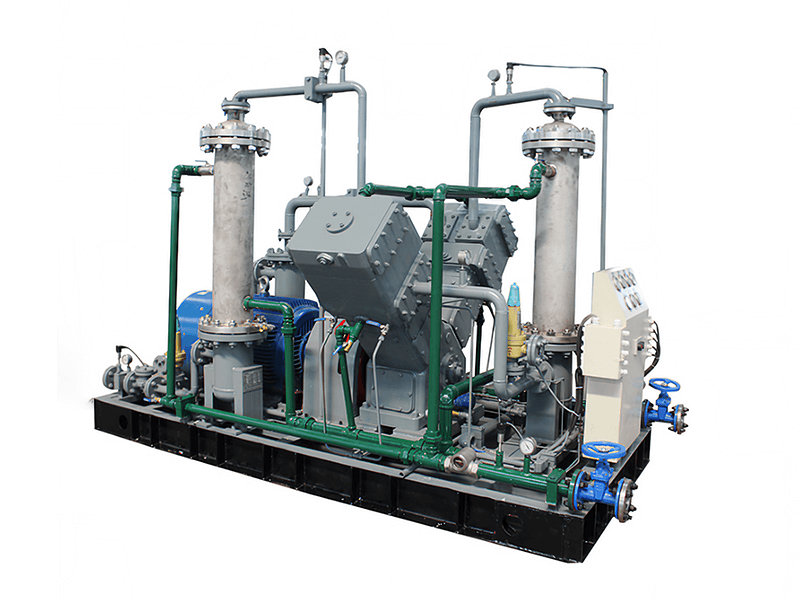
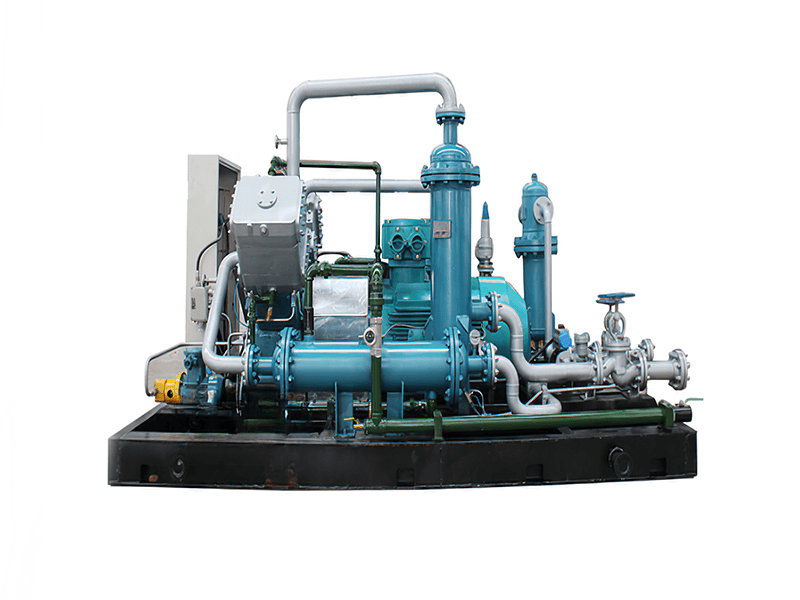
In terms of type selection, reciprocating compressors are suitable for high-pressure, low-flow scenarios such as CO₂ filling; screw compressors are suitable for medium-pressure, high-flow applications such as transcritical CO₂ refrigeration systems; centrifugal compressors are suitable for large-scale CCUS carbon capture projects, offering high flow and high efficiency; and diaphragm compressors are suitable for high-purity CO₂ compression, avoiding oil contamination. Each type has its own application boundaries, and selection must be comprehensively determined based on pressure, flow, purity, and operating cost.
Technical difficulties are mainly concentrated in high-pressure sealing, efficiency optimization, pressure-resistant materials, and intelligent control. For high-pressure sealing, combined solutions such as dry gas seals and magnetic fluid seals can be adopted. Transcritical cycles have relatively large throttling losses, and efficiency can be improved by recovering work through an expander and optimizing the internal flow passages of the compressor. In terms of materials, high-strength alloys and duplex stainless steel impellers are increasingly being used. The pressure of transcritical systems varies with ambient temperature, requiring real-time optimization of discharge pressure; intelligent control has therefore become a standard capability.
In terms of market prospects, global CCUS projects are being deployed at an accelerating pace, and demand for CO₂ compressors is growing rapidly. The EU F-Gas Regulation is driving CO₂ refrigeration to replace HFCs in supermarkets and industrial applications. Under China’s “dual carbon” policies, CCUS demonstration projects are being launched successively, bringing important opportunities for domestic CO₂ compressors. It can be foreseen that CO₂ compressors are key equipment connecting “emission reduction” and “environmentally friendly refrigeration.” As carbon markets and environmental regulations continue to improve, CO₂ compression technology will enter a period of rapid growth. The company will also continue to deepen its presence in this field, advancing innovation in high-pressure sealing, transcritical control, high-efficiency compression, and intelligent operation and maintenance, to provide more reliable and more efficient compression solutions for CCUS and environmentally friendly refrigeration.